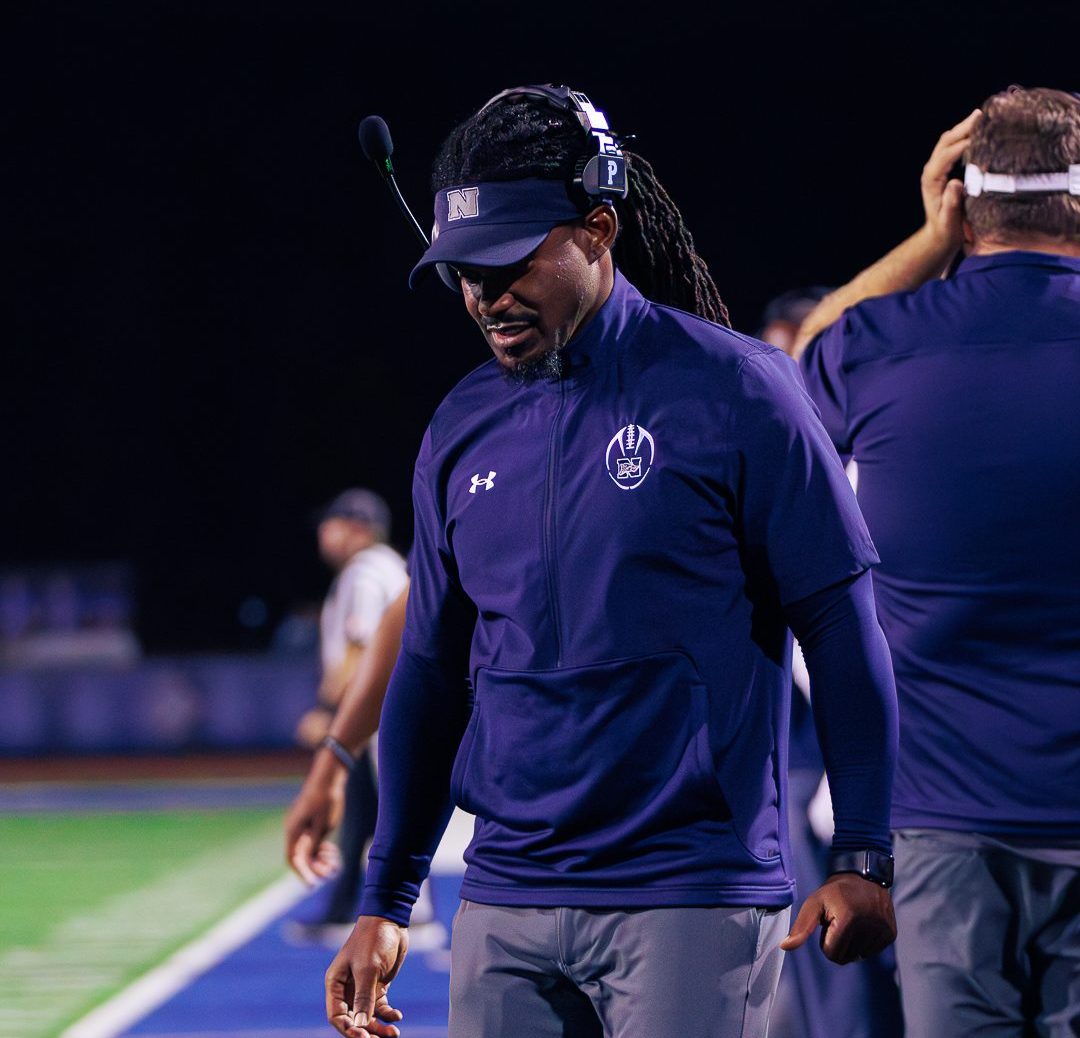
For Coach Chavius Jackson Sr., football has always been more than a game, It’s a calling. It is a platform to uplift, inspire, and mold young men into leaders on and off the field. As a defensive coordinator, Jackson doesn’t just draw up schemes; he builds character, instills discipline, and encourages accountability. Jackson’s defensive philosophy is crystal clear: fast, physical, and relentless. That identity doesn’t just define how his players perform between the whistles, it speaks to how they prepare, how they communicate, and how they carry themselves through adversity. Whether it’s swarming to the ball, fighting through fatigue, or lifting up a struggling teammate, Jackson demands a full commitment to the team. His consistency, humility, and faith-driven approach have made him more than just a coach. He has become a mentor, a role model, and in many cases, a father figure. At the end of the day, wins are great, but for Coach Chavius Jackson Sr., the real victory is in the lives he changed. Through his unwavering commitment to excellence, accountability, and personal growth, he’s building something bigger than football, he’s building better men.
Today we’d like to introduce you to Coach Chavius Jackson Sr.
What first inspired you to become a coach?
I’ve always known I wanted to make a difference in the lives of young people in my community. Coaching football became the perfect way to do that. It’s more than just a game to me, it’s a platform to teach life lessons, build character, and create a sense of purpose and belonging for the youth. I’ve had the privilege of coaching at every level, and each experience has reinforced how powerful this role can be. Coaching has become like therapy for me, it’s where I feel most connected, most driven, and most at home.
What is your overall defensive philosophy?
We play defense with speed, aggression and discipline. Our goal is to dominate every snap, disrupt timing and impose our will. We will play fast, physical and will be assignment sound.
How would you describe your coaching style?
My coaching style is relationship focused. I coach hard, but I love harder. I build real relationships with my players on and off the field. They know I care about them as young men first, athletes second. That trust allows me to push them further.
How do you build a winning culture within a defense?
For me, building a winning culture on defense starts with setting a clear standard of effort, toughness, and accountability. I want our identity to be fast, physical, and relentless, and that has to show up every single day, not just on game night. We coach effort just as hard as we coach technique, and we compete in everything we do. I believe in developing leadership from within, creating ownership where players hold each other accountable and take pride in the unit.

How do you define success beyond wins and losses?
To me, success goes far beyond the scoreboard. It’s about building young men who are accountable, disciplined, and resilient—both on and off the field. I define success by how our players grow throughout the season: how they respond to adversity, how they lead their teammates, and how they represent our program in the classroom and the community. If our guys leave better teammates, better students, and better people, then we’ve won in the ways that matter most. Of course, we want to compete and win games, but the real win is developing a culture that lasts longer than four quarters.
How do you balance developing players with the demands of winning?
Balancing player development with the demands of winning is all about intentional planning and long-term vision. We make it a priority to rotate players throughout the season at certain positions to build depth and ensure that more kids are getting meaningful reps under the lights. This approach helps us develop our younger or less experienced players so that if a starter goes down, the next man up isn’t just a name, he already has game experience. It also keeps our team fresh, builds competition, and creates buy-in from more players across the roster. We believe that developing our entire unit makes us stronger, more prepared, and ultimately gives us a better chance to win when it matters most.
How do you keep your team motivated during tough times?
Tough times are where your culture is truly tested, and that’s when leadership matters most. I keep our team motivated by reminding them of our ‘why’—why we play, who we represent, and the standard we hold ourselves to. We stay focused on growth, not just outcomes, and celebrate small wins: better execution, more effort, improved communication.
What’s something your players might be surprised to know about you?
Honestly, my players probably know just about everything about me, I’m pretty open with them. A lot of them joke around and say, ‘Coach Jackson, you’ve done everything and know everybody.’ I use those experiences to connect with my guys. If anything surprises them, it’s usually just how many random stories I have or the people I’ve crossed paths with. It keeps things fun, and it helps me build strong relationships with them.
How do you handle a situation where a player is struggling with a particular concept?
When a player is struggling with a concept, the first thing I do is make sure they know my door is always open. I encourage them to come to me anytime they need extra help, whether it’s after practice, before school, or even over text. I believe communication is key, so I try to create a supportive environment where players feel comfortable asking questions without fear of judgment. Then, I’ll break down the concept in different ways—whether through extra reps, one-on-one teaching, or film review—until they fully understand it. My goal is to build their confidence so they can perform at their best.

What would your players say about you as a coach?
I think my players would say I’m a players’ coach—someone they can talk to, laugh with, and trust. I like to lighten the mood before practice with jokes, conversations, and just checking in on them as people, not just athletes. But once it’s time to work, I’m all business. I coach hard and hold them to a high standard because I believe in their potential. I think they’d say I push them, but they also know it comes from a place of love and wanting the best for them—on the field and in life.
How do you handle pressure and expectations as a coach?
Pressure and expectations come with the job, and I embrace that. I’ve learned to focus on what I can control—our preparation, our effort, and our culture. I don’t get too high or too low based on wins or losses. Instead, I stay consistent and try to model poise for my players. I also lean on my faith, my support system, and my coaching staff to stay grounded.
What’s one piece of advice you’d give to young coaches just starting out?
My biggest advice to young coaches is to focus on building relationships first. The X’s and O’s matter, but players will only buy in when they trust you and know you genuinely care about them as people. Be patient, stay consistent, and never stop learning from your players, your staff, and even your mistakes. Coaching is as much about developing character as it is about winning games, so keep that perspective, and the rest will follow.
What legacy do you hope to leave behind?
I want my legacy to be bigger than football. I hope people remember me as a coach who used the game to shape young men into better leaders, husbands, fathers, and teammates. I want my players to look back and say, ‘Coach Jackson pushed me, believed in me, and taught me how to handle life—not just football.’ Wins are great, but the real legacy is in the relationships, the lessons, and the impact that lasts long after the final whistle. If I can be remembered as someone who built men, not just athletes, then I did my job.

If you have a compelling story to share or would like to be featured on our website, we’d love to hear from you! Whether you’re an athlete, coach, fan, or someone with an inspiring journey connected to sports, your voice matters.


