Getty Images
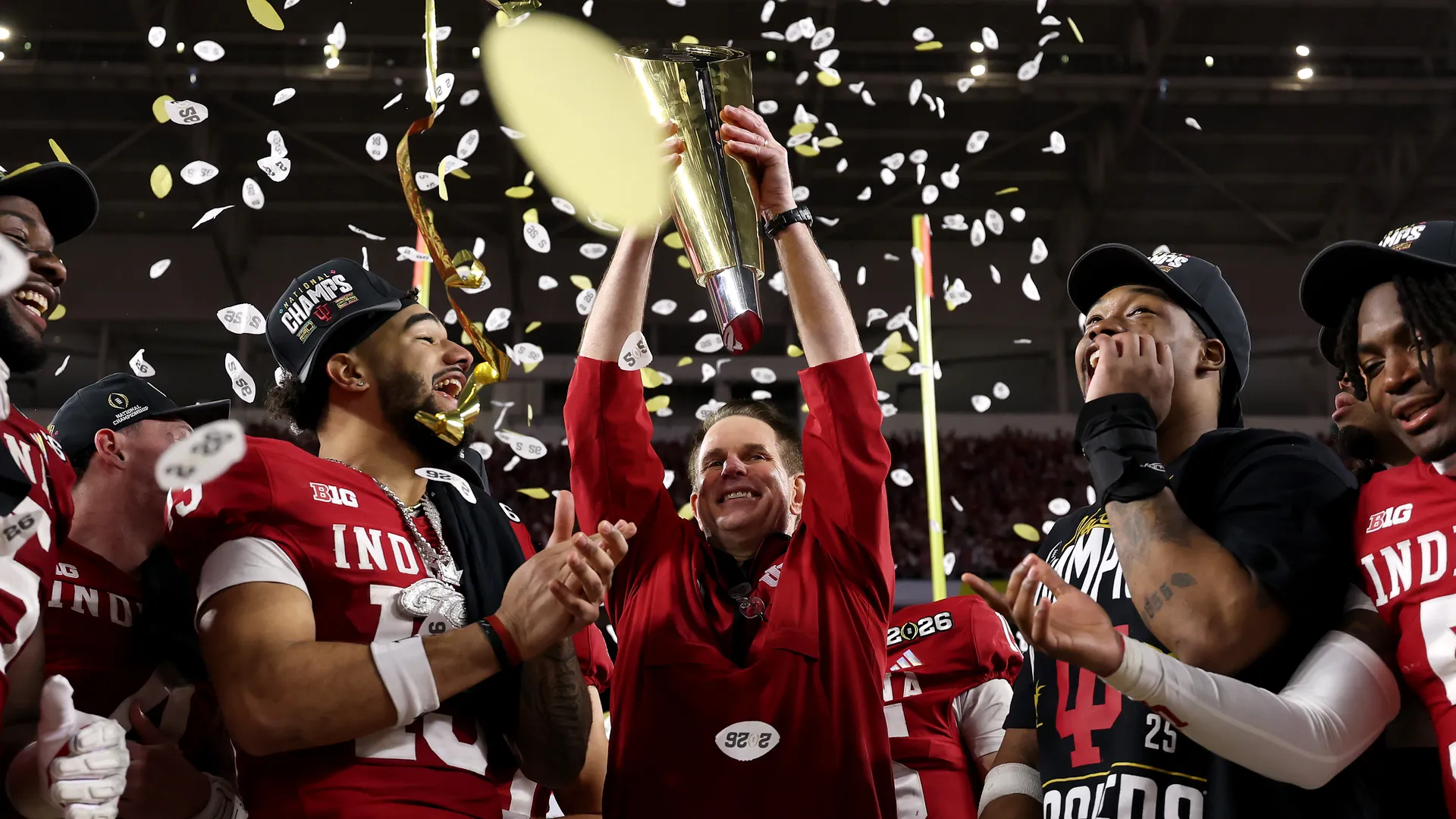
Atlanta, GA – Indiana captured a national championship in dramatic fashion on Monday night, delivering one of the most memorable finishes the sport has seen in recent years. Confetti fell, players celebrated, and Hoosier fans reveled in a moment that once felt unimaginable. Yet as the excitement settled, the championship win quickly became the center of a much larger and more controversial conversation about the direction of college football.
While Indiana’s title run will forever be etched into the record books, it has also drawn criticism due to a surprising statistic that continues to gain traction: the average age of Indiana’s roster reportedly sits around 23 years old. To put that into perspective, that number is uncomfortably close to the Green Bay Packer’s average roster age of roughly 25. For many fans and analysts, that comparison raises an unavoidable question, at what point does college football stop feeling like college football?
The Age Factor and Competitive Balance
College football has always featured a range of player ages, especially with redshirts, injuries, and mission years factoring into eligibility. However, the modern landscape has changed dramatically. With the NCAA transfer portal, relaxed eligibility rules, and the COVID-19 eligibility extensions still rippling through the sport, rosters are now filled with players who have been in college programs for five, six, or even seven years.
Indiana leaned heavily on experienced transfers during its championship run. Players who had already spent years developing physically and mentally at other programs. While this approach is completely within the rules, critics argue that it creates an uneven playing field. A 23 or 24 year old player with years of college strength training and game experience naturally holds an advantage over an 18 or 19 year old freshman straight out of high school.For purists, the concern isn’t about Indiana breaking rules, it’s about whether the rules themselves have tilted competition too far in one direction.
The Transfer Portal Era: New Norm or Temporary Phase?
The transfer portal has already reshaped college football in ways few could have predicted. What was once designed to empower athletes and provide freedom of movement has now become a primary roster-building tool for many programs. Indiana’s championship may accelerate that trend. If proven successful, more teams may decide that recruiting high school talent is no longer enough. Instead of waiting two to three years for players to develop, coaches can plug immediate holes with seasoned transfers who are physically mature and mentally ready. Championships, after all, often determine job security. This shift could force programs, especially those outside traditional powerhouses to rely more heavily on the portal than on high school recruiting. Why gamble on potential when proven experience is available?
What Happens to High School Recruits?
One of the most concerning ripple effects of this trend is what it means for high school athletes. Scholarship opportunities may shrink as rosters prioritize transfers who can contribute immediately. Developmental players may find fewer chances to grow within a program, and the traditional pipeline from Friday nights to Saturdays could weaken. High school coaches, recruiters, and parents are already voicing concern that college football is becoming a “second-chance league” rather than a developmental one. If this trend continues, elite high school prospects will still find opportunities, but middle-tier recruits may be squeezed out altogether.
Fans Push Back: “This Doesn’t Feel Like College”
Beyond competitive balance and recruiting implications, fan perception may be the most significant long-term issue. For many fans, college football’s appeal lies in its rawness young athletes playing with emotion, tradition, and school pride. The idea of “grown men” dominating teenagers on Saturdays has turned some fans off entirely.
Social media reaction following Indiana’s championship made that sentiment clear. While some praised the Hoosiers for maximizing the system, others questioned whether the sport is losing its identity. When college teams resemble minor-league professional rosters, the emotional connection fans once felt can begin to fade.
A Crossroads for College Football
Indiana’s national championship will always be remembered, but not just for the final score. It may mark a turning point in how championships are built and how rosters are constructed. The transfer portal isn’t going away, and neither is the pressure to win now. The real question is whether college football can find balance empowering players without sacrificing the spirit of the game. If not, championships like Indiana’s may become less about tradition and more about who can assemble the oldest, most experienced roster.
For now, Indiana stands on top of the sport. But the debate sparked by their victory may shape college football’s future far longer than the celebration lasts.